
July 26th – Time has flown by and we’re wrapping things up here in Modena, it will be very hard to say goodbye to such a wonderful city. Because we worked on group projects today, there was only one off-campus visit. It was a behind-the-scenes tour of Teatro Comunale Pavarotti-Freni AKA the Luciano Pavarotti Opera House. The opera house is located at 8 Via del Teatro. That’s a 12-minute walk to the northwest from our UNIMORE classroom.
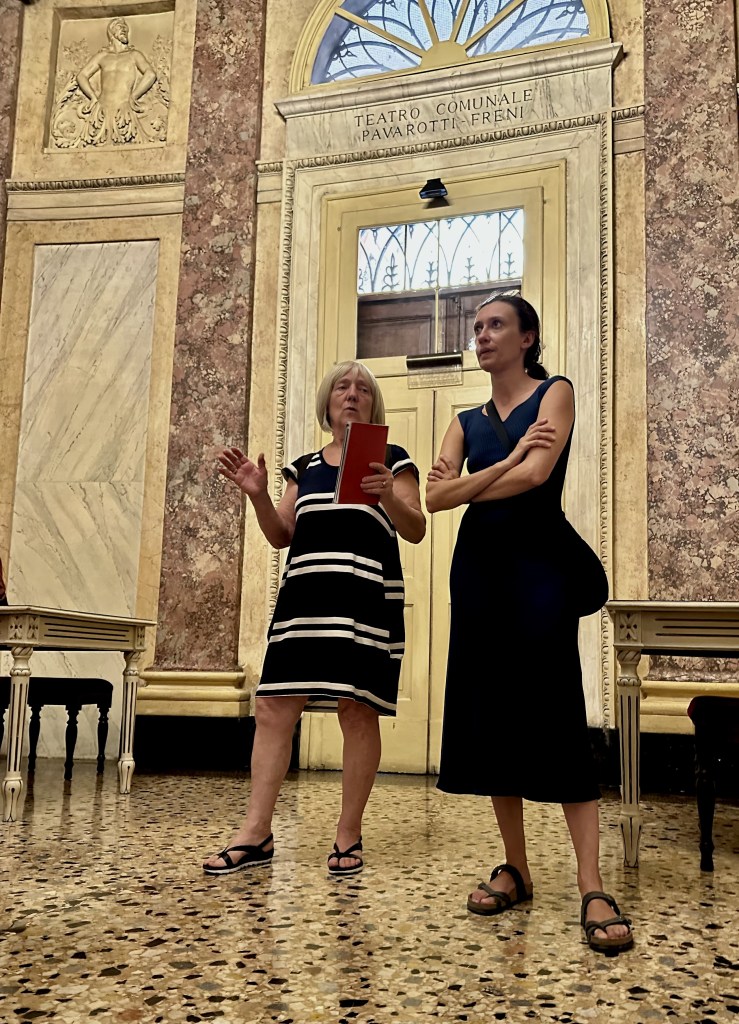
OK, Now Who Is The Lady On Our Left? Look At That Marble Wall..
Located in the historical center of Modena the opera house is the performance home base for many of the world’s greatest opera singers. Plus, it was the same for its late native son and namesake. It works with international tour operators to bring visitors to Modena.

Wait Till You See The Really Big Chandelier…
A design note, the opera house was designed by Francesco Maria Vandelli a renown Modena architect of royal descent. Signor Vandelli skillfully integrated décor from the themes of the then contemporary opera houses in Mantua, Milan, and Piacenza. Barring periods of war and unrest, the opera house has been open since its October 1841 premier.

The Big Chandelier and the Ducal Stall.
Our tour leader was Signora Elisa Pagliarini. Note: My JHU study group worked on a presentation about wheel chair access at various cultural heritage sites in Modena. So, our tour of the opera house was very helpful. Upon arrival we discovered the opera house has a wheelchair use only elevator which affords access to most of its public areas. Most non-public areas of the opera house don’t have limited mobility access. Thankfully, anyone in a wheelchair with a valid ticket can come and experience an Italian opera in Modena.
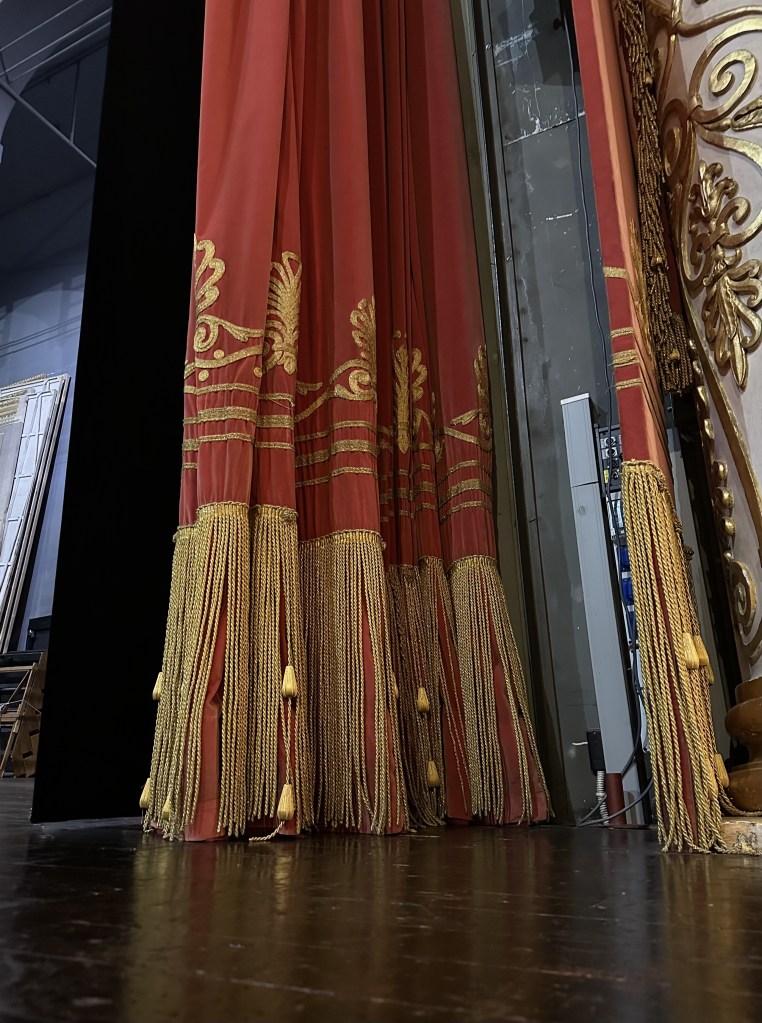
Curtains, Yes Four Of Them, Go Ahead And Count Them…
After following Signora Pagliarini through some winding low ceiling corridors and then heading up some stairs our tour began in the oval shaped northside entrance hall. Many of us were very surprised to learn the marbled columns and walls “are not.” Well, that is they are columns and walls, but they are not made of marble. They appear to be via a painting process called faux marbling and when it’s done correctly it achieves the desired purpose. That’s a rather unusual heritage skillset but necessity if often the mother of invention.

Where Two Worlds Meet.
We next travelled up several flights of stairs to a huge room where art students from Firenze were laying out and pre-painting backdrops for the next opera production. It was a no-photo zone as the new production is still in progress and thus confidential. Signora Pagliarini explained having students carryout the bulk of the work gratis gives them an opportunity to learn new skillsets and provides a very significant cost savings to the opera.

Yes, This Is The Dukes Stall.
One of the Firenze students pointed out that the wall of wooden doors had original playbills posted and that the one on the far left was for the opening night in 1841. A JHU student was bold enough to ask Signora Pagliarini if we could take photos of the playbills and she said yes. I took a high-resolution photo of playbill #1. It’s quite a bit worse for the wear but consider it’s 182 years old: slapped up there “temporarily” with flour paste or horse glue.

The Show Must Go On… And This Is From The First Night…
And onto the stalls (US term loges) and stage. Big, bright, and bold – white, red and gold. Throw in some green and a huge, beautiful chandelier. Plus, don’t forget the Ducal Stall, the stall with the giant eagle above it, you can’t miss it. Back then lesser nobles had their own stalls too, and the remainder of persons are seated in chairs on the floor. When we visited the floor was extended right up to but at a level lower than the performance stage.
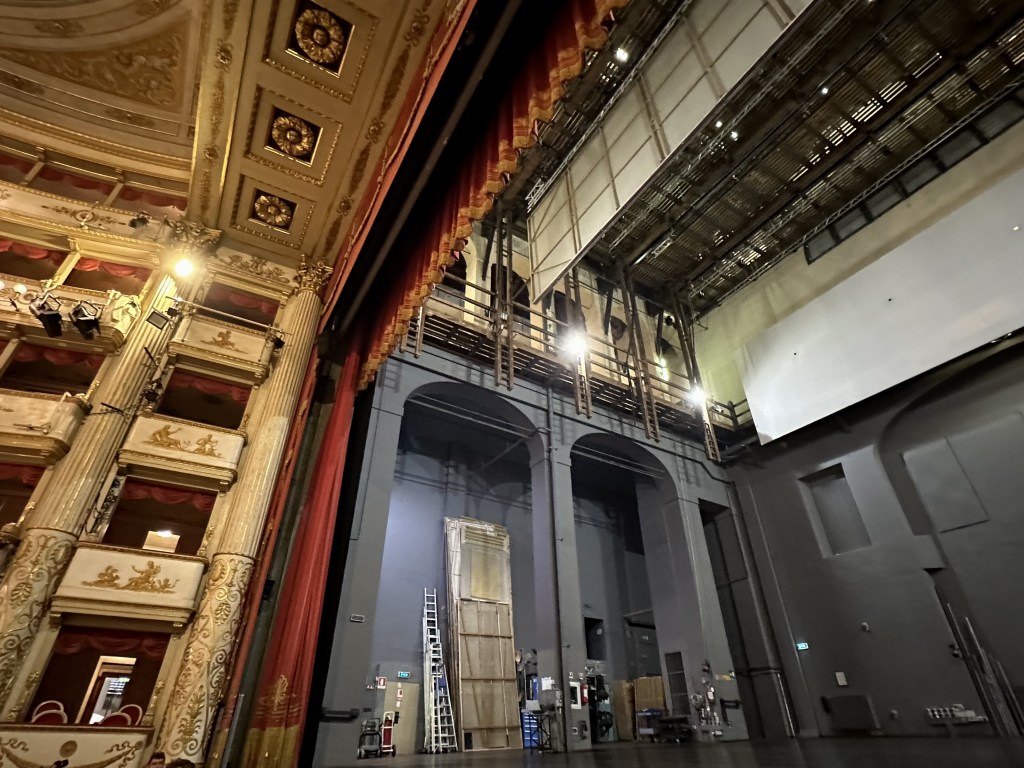
Where Two Worlds Meet.
Signora Pagliarini provided a wealth of helpful information. I seem to recall one of our professors saying another name for the orchestra pit is the “mystic gulf” and one student commented that it goes back to the German composer Wagner. I took their word for it.
We learned that the floor can be elevated to merge with the stage and become a ballroom. It was asked if the opera house maintains a list of VIPs who use the Ducal Stall and the answer was to the effect of ‘yes, if they’re a VIP.’ We were impressed with Professor Padovani’s knowledge of the engineering/technology stage workings, that is backdrops, beams, curtains, lighting, etc. Has our professor performed on that famous stage? Hmm…
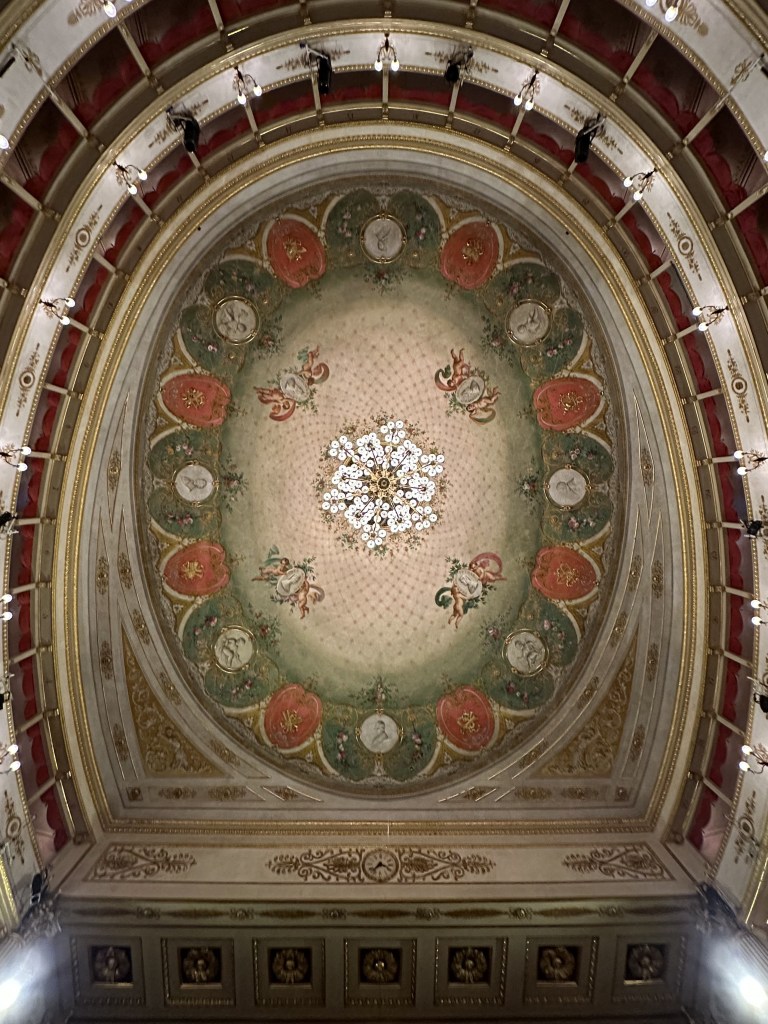
Not Just Any Old Ceiling…
A very pleasant surprise was that two of our classmates, Dani and Greg, can and did sing opera music on the Pavarotti Opera House at the end of our tour. That’s something they can tell their kids and grandkids (when the time comes). They were great, it was fantastic!
The city’s Tourist Information Bureau has an informative webpage designed to encourage people to visit Modena and include Teatro Comunale Pavarotti-Freni (see Visit Modena).
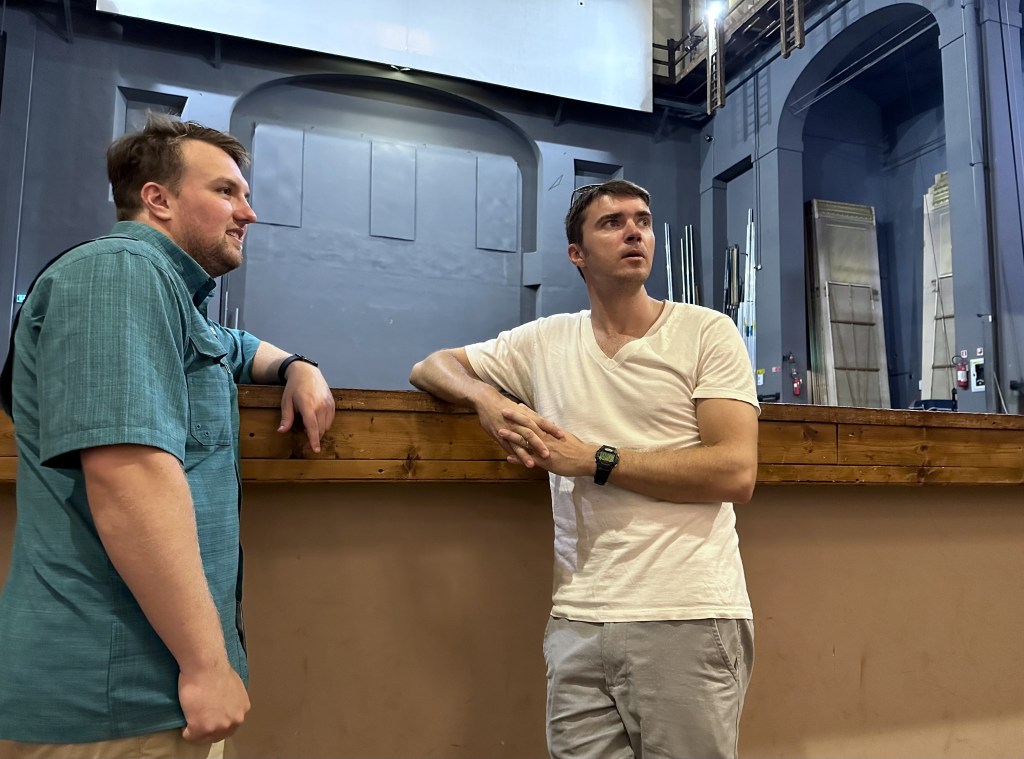
Local Stage Hands Elia and Gregorio “When Are Those Americans Leaving?
After reading the free pamphlet we received when leaving the Luciano Pavarotti Opera House (pamphlet of the same title) I discovered a wealth of information. First, I believe it was written by our guide whom we thought was a volunteer – but she is probably the Curator for the opera house. Second, the foundation gives school children tours – OK. Third, much more importantly the foundation is in the business (well, the not-for-profit business) of arranging operatic music and vocal lessons for the young people of Modena.
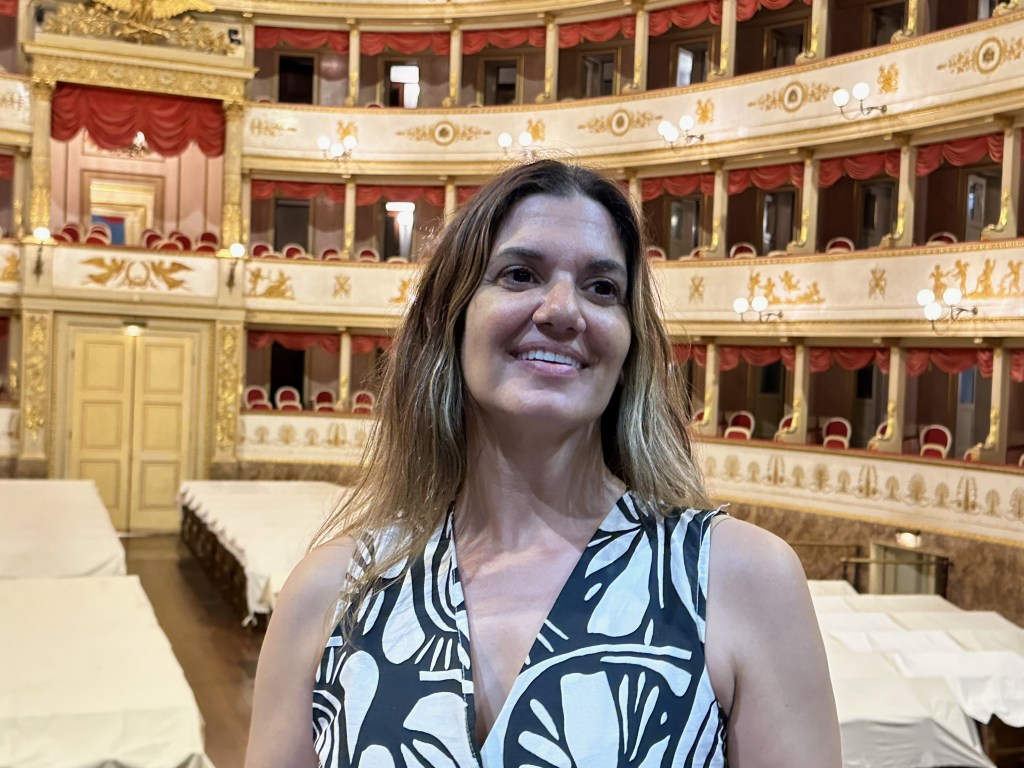
Classmate Dani’s Debut – She Received A Standing Ovation… Really!
If that was mentioned during the tour, somehow, I missed it. If that wasn’t mentioned it absolutely should be mentioned and right at the beginning. That’s a key critical element – passing on the craft to the following generations, otherwise the craft will die out. It’s the along similar lines that Signora Rosa mentioned during our visit at the PDO/PFI trade consortium. Their organization sets up community festivals, the plate design contests for children, etc. – all things that get school age kids interested, involved, and motivated.
References:
FTCM, 2020. TEATRO COMUNALE PAVAROTTI-FRENI, Fondazione Teatro Comunale di Modena, IT. https://teatrocomunalemodena.it/en/
MMTF, 2023. Pavarotti-Freni Municipal Theater – Educational Itineraries Webpage. Modena Municipal Theater Foundation, Modena, IT. https://teatrocomunalemodena.it/itinerari-didattici/
Pagliarini, E., 2012. Municipal Theater of Modena – Luciano Pavarotti, Guidebook, 15 pp.
Visit Modena, n.d. The Luciano Pavarotti Municipal Theatre of Modena – Webpage. Modena Official Tourist Information Site, Modena, IT. https://www.visitmodena.it/en/discover-modena/art-and-culture/theaters/luciano-pavarotti-municipal-theatre-of-modena
 Grande Giro di Modena